Melbourne winters can be cold, damp and changeable, making reliable home heating important. For many households, heating with air conditioning provides a practical way to warm living spaces while keeping the same system useful during summer.
Before choosing heating with air conditioning, look beyond price and maximum capacity. Home size, insulation, room layout, system efficiency, electricity costs, installation quality and maintenance can all affect comfort and long-term performance.
Why Is Heating with Air Conditioning a Practical Choice in Melbourne?
Modern reverse-cycle systems operate as heat pumps. Instead of using electricity to create heat directly, they transfer available heat from outside into the home. This is why a reverse-cycle system can produce substantially more heat than the electrical energy it consumes under suitable conditions.
The Australian Government explains that reverse-cycle air conditioners can reach very high efficiency because they move heat rather than generate it. Government guidance also recommends considering climate, building design and correct sizing when selecting heating equipment.
For Melbourne households, heating with air conditioning can provide winter heating and summer cooling from one system.
What Type of System Works Best for Heating with Air Conditioning?
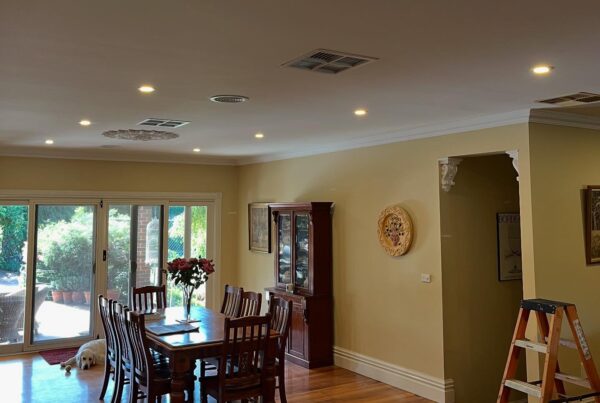
A single split system may suit a living room, bedroom or open-plan area. Multi-split systems can serve several rooms, while ducted reverse-cycle systems can distribute heating throughout multiple zones.
For effective heating with air conditioning, think about where people spend most of their time. Heating unused rooms every day can increase energy consumption without improving comfort.
Inverter technology allows a compressor to adjust its output to match heating demand. Instead of repeatedly switching fully on and off, the system can operate at a lower output once the desired temperature is approached.
How Does Home Size Affect Heating with Air Conditioning?
Correct sizing is one of the most important factors in heating with air conditioning. An undersized unit may struggle on colder days, while an oversized system may cost more than necessary and may not provide the most consistent comfort.
Sizing should be considered more than floor area. Ceiling height, insulation, window size, orientation, construction materials, draughts and the number of rooms being heated can all influence demand.
Melbourne’s winter conditions should also be considered. The system needs sufficient heating capacity for colder periods without being selected simply because it has a high maximum output.
What Should You Check on the Energy Rating Label?
When comparing equipment for heating with air conditioning, examine the Zoned Energy Rating Label rather than looking only at the number of stars.
The label provides information about performance in Australian climate zones, heating and cooling capacity, estimated annual energy use and noise. This makes it useful when comparing models for Melbourne conditions.
The Australian Government states that higher star ratings generally indicate better efficiency, provided the system is appropriately sized. Its Energy Rating Calculator can also help households compare air-conditioning options.
For heating with air conditioning, check heating performance for the relevant climate zone as well as cooling performance. A model that performs well for summer cooling may not necessarily be the best winter choice.
How Important Are Insulation and Draught Control?
Even efficient equipment has to work harder when heat escapes quickly.
Before increasing heating capacity, consider whether the home has obvious sources of heat loss. Gaps around doors and windows, inadequate insulation and poorly fitted window coverings can all affect indoor comfort.
For better heating with air conditioning, simple improvements can help retain warmth and reduce unnecessary system operation. Closing doors to unused rooms and using suitable curtains at night can also support temperature control.
The goal is not to make the air conditioner do all the work. A reasonably well-sealed home gives the system a better environment in which to maintain a stable temperature.
What Temperature Should You Set?
For heating with air conditioning, select a comfortable target and allow the system to operate steadily rather than repeatedly changing the setting. Inverter equipment can reduce its output as the room approaches the selected temperature.
Timers and schedules can prevent unnecessary operation when nobody is home. Zoning can be particularly useful for households with different daily routines.
This also affects air conditioner heating efficiency. The way a system is operated can influence energy use almost as much as its rated performance.
Does Maintenance Affect Heating Performance?
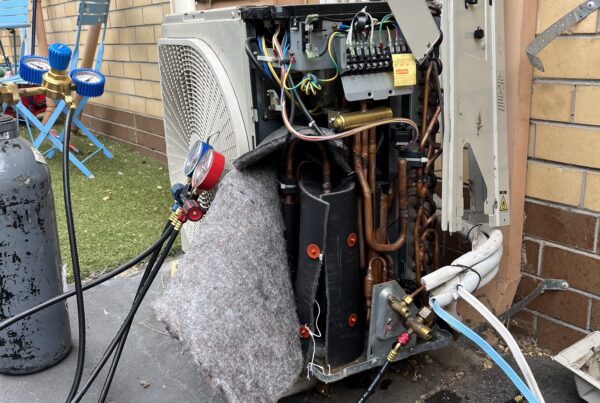
Yes. Filters, indoor coils, fans and outdoor components should remain clean and unobstructed.
Dirty filters can restrict airflow and make the system work harder. Outdoor units also need adequate clearance so air can circulate properly.
The Australian Government recommends regular cleaning and servicing for efficient operation, with servicing undertaken by a licensed technician. Homeowners can generally clean accessible filters according to the manufacturer’s instructions.
If heating with air conditioning suddenly becomes less effective, do not simply increase the temperature setting. Reduced airflow, a dirty filter, a fault or another technical issue may be responsible.
Which Heating Factors Should You Compare?
| Factor | Reverse-cycle split system | Ducted reverse-cycle system | Portable electric heater |
Heating method | Heat pump | Heat pump | Electrical resistance |
| Suitable for | Individual rooms or zones | Multiple rooms | Small areas |
Cooling function | Yes | Yes | Usually no |
| Zoning | Good with multi-split options | Strong with suitable controls | Very limited |
Efficiency potential | High | High, depending on design | Lower for equivalent heat |
| Installation | Moderate | More complex | Minimal |
Temperature control | Precise | Precise with suitable controls | Basic to moderate |
| Year-round use | Heating and cooling | Heating and cooling | Mainly heating |
This comparison shows why heating with air conditioning can be attractive for households wanting one system for year-round temperature control. However, the best option still depends on the property and how rooms are occupied.
How Do Electricity Costs Affect Heating with Air Conditioning?
Efficiency and electricity price are separate considerations. A highly efficient system can still use significant electricity if it operates for many hours, heats a large area or is set to an unnecessarily high temperature.
When estimating running costs, consider the system’s expected energy use, electricity tariff, operating hours and the size of the area being heated. These details are central to heating with air conditioning costs.
Solar generation may also influence costs for some Melbourne households. If heating occurs during periods of solar production, some demand may be supplied by rooftop solar. Actual savings depend on solar capacity, weather, household consumption and the electricity plan.
This is why heating with air conditioning should be assessed using expected household use rather than a generic running-cost claim.
How Can You Improve Energy Efficient Air Conditioning Heating?
Start with practical habits. Keep filters clean, avoid blocking indoor airflow, use sensible temperature settings and close off unused areas where appropriate.
If your system is older, compare its current performance with modern reverse-cycle models. The Australian Government’s current heating and cooling guidance identifies electric reverse-cycle systems as an efficient heating option and explains that regular cleaning and servicing can help maintain performance.
For independent product information, review the government’s Energy Rating Calculator before making a major purchase. It is a useful step when comparing heating with air conditioning options.
The calculator and Zoned Energy Rating Label can help you compare efficiency rather than relying on marketing claims.
What Should Melbourne Homeowners Consider Before Installation?
Look at the whole property rather than choosing a unit from one specification. Consider capacity, unit locations, noise, zoning, airflow and electrical requirements.
Indoor units should distribute warm air without being blocked by furniture or curtains. Outdoor units need suitable airflow and practical access for maintenance.
Correct installation is therefore an important part of heating with air conditioning. Poor placement or setup can reduce the comfort and efficiency expected from a suitable system.
When Should You Upgrade an Existing System?
An upgrade may make sense when the current unit is unreliable, difficult to control, inefficient or no longer suitable for the household.
Warning signs can include repeated faults, unusual noises, inconsistent temperatures and higher electricity consumption without a major change in usage.
However, age alone does not automatically mean replacement is necessary. Compare repair costs, current efficiency, expected reliability and the benefits of newer technology.
For households planning air conditioning for home heating, an assessment can help determine whether improving the existing system or replacing it is likely to provide better long-term value.
Conclusion
Choosing heating with air conditioning for a Melbourne home is not simply about buying the highest-rated model. Capacity, climate performance, insulation, zoning, installation, electricity use and maintenance all influence the result.
If your current system struggles to maintain comfort, compare its performance with your household’s actual needs and review whether heating with air conditioning remains the right fit. Plan your heating upgrade around long-term comfort and efficiency rather than upfront specifications alone.
For tailored advice about system selection, installation or improving performance, speak with a qualified electrical and air-conditioning professional who can assess your home and recommend an appropriate approach.
Frequently Asked Questions
1. Is heating with air conditioning efficient in Melbourne?
Yes. Modern reverse-cycle air conditioners can be highly efficient because they transfer heat instead of generating it directly. Actual performance depends on the system, outdoor conditions, sizing, insulation and operation.
2. Can heating with reverse cycle air conditioning reduce energy use?
It can, particularly compared with resistance-based electric heaters. Actual energy use depends on system efficiency, operating hours, electricity prices and the amount of space being heated.
3. How can I improve air conditioner heating efficiency?
Keep filters clean, reduce draughts, use sensible thermostat settings, heat occupied areas and maintain the system. Correct sizing and professional installation are also important.
4. Is heating with air conditioning suitable for bedrooms?
A correctly sized split system can be suitable for bedrooms, provided the indoor unit is positioned appropriately and operated at comfortable settings. Noise, airflow and room size should be considered.
5. Should I choose split or ducted heating?
A split system may suit one or two frequently used rooms, while ducted systems can be useful for multiple areas and zoning. The home’s layout, budget and heating habits should guide the decision.