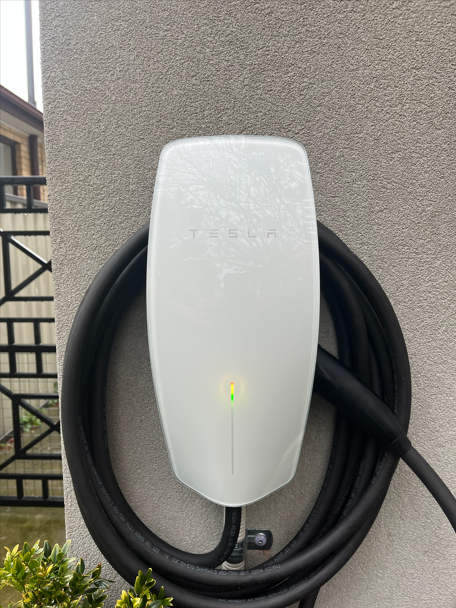
Buying an electric vehicle changes one small part of everyday life: where you refuel. For many Melbourne drivers, charging at home is more convenient than making regular trips to a public charging station. Electric vehicle charger installation makes that possible by giving the car a dedicated place to charge.
However, putting a charger on a garage wall is not the whole job. Electric vehicle charger installation needs to suit the vehicle, electrical system, available space and way the household uses electricity.
What Should You Check Before Electric Vehicle Charger Installation?
It is tempting to start by comparing charger brands and charging speeds. A better starting point is the home itself.
Every property has its own electrical setup. A newer house may have a relatively straightforward arrangement, while an older Melbourne home could need additional work around the switchboard or wiring.
Think about how the vehicle is normally used. If the car is parked at home overnight and only travels a modest distance each day, there may be little reason to choose the highest-powered charger available.
The vehicle’s own charging capability also matters. A charger can only deliver what the car is designed to accept.
Before arranging electric vehicle charger installation, it is useful to consider:
- The vehicle’s maximum AC charging rate
- Typical daily driving distance
- How long the vehicle remains parked at home
- The location of the switchboard
- Available electrical capacity
- Whether the charger will be indoors or outdoors
- Whether solar power may be used for charging
Victoria’s Energy Department recommends considering the vehicle, home, charging requirements and the speed required when choosing an EV charging arrangement. This makes the initial assessment just as important as the charger itself.
Step 1: Understand Your Vehicle’s Charging Needs
Not every electric car charges at the same rate.
Some vehicles can accept relatively modest AC charging, while others can make better use of a higher-powered home charger. Looking at the manufacturer’s specifications can prevent you from paying for capacity that your vehicle cannot use.
Daily driving habits are equally important.
For example, someone who drives a short distance to work and returns home each evening may have plenty of time to recharge overnight. Another driver covering long distances every day may place greater value on faster charging.
This is why electric vehicle charger installation should begin with actual driving habits rather than a charger advertised with the biggest number.
Step 2: Have the Electrical System Assessed
The existing electrical system needs to be considered before a dedicated charger is selected.
An electrician can inspect the switchboard, wiring, existing circuits and available capacity. The assessment can also identify the most practical route for running the cable to the proposed charging location.
A charger adds a substantial electrical load, particularly when it operates at a higher output for an extended period. That load needs to be considered alongside other equipment already operating in the home.
Energy Victoria advises homeowners to consider the condition of existing wiring and whether electrical upgrades may be needed for home EV charging.
Importantly, an assessment does not automatically mean that a switchboard needs replacing. The requirement depends on the condition and capacity of the existing installation.
Step 3: Choose the Appropriate Charger
There are several levels of EV charging, and they are designed for different situations.
Charging option | Typical application | Approximate power | What to consider |
| Level 1 AC | Basic household charging | Around 2.4 kW | Lowest charging speed |
Level 2 AC | Dedicated home or workplace charging | Around 3.6–22 kW | Faster charging with dedicated circuitry |
| Level 3 DC | Public rapid charging | Around 50–350 kW | Generally unsuitable for ordinary residential setups |
For many homeowners, a Level 2 charger is the option worth investigating when a dedicated home charging point is wanted. Victorian Government guidance explains that Level 2 chargers require dedicated circuitry and may be installed with single-phase or three-phase electrical supplies.
The most powerful option is not necessarily the most sensible one. Charger output should match the car, electrical supply and household requirements.
Step 4: Decide Where the Charger Should Go
The physical position of the charger can make a surprising difference to how convenient it is.
Ideally, the cable should reach the vehicle without stretching across a walkway or creating an avoidable obstruction. The position should also work if the household changes vehicles in the future.
A charger might be installed in a garage, carport or suitable external wall. The best position depends on the parking arrangement and the route from the electrical supply.
Cable length matters too. A charger placed a long distance from the switchboard may require more cable and more installation work than one positioned nearby.
For electric vehicle charger installation, it is worth deciding where the vehicle will normally be parked before finalising the mounting position.
Step 5: Plan the Dedicated Circuit
A home EV charger should be treated as a significant electrical appliance rather than an ordinary plug-in device.
The electrician needs to determine how the charger will be supplied and what protective equipment is appropriate. Cable size, circuit protection and the existing electrical installation all form part of the design.
This is particularly important where the charger will operate for several hours at a time.
The aim is not simply to make the charger work. The electrical installation needs to be suitable for the expected load and completed in accordance with applicable requirements.
Good electric vehicle charger installation therefore involves electrical planning before equipment is mounted.
Step 6: Think About Solar Charging
Solar panels can add another consideration for Melbourne homeowners.
If a property generates solar electricity during the day, some EV owners may want to use that generation for vehicle charging. Whether this works well depends on the home’s electricity consumption, solar output, charger controls and the time the vehicle is parked at home.
Smart chargers can provide additional scheduling options. Some allow charging to be programmed around household energy use or solar generation.
There is no single solar-charging setup that suits every property, though. A household that uses most of its solar electricity during the day may have a different outcome from one where the car is normally parked at home during those hours.
Step 7: Consider Smart Charging Features
Smart charging is another feature to investigate, particularly for households that want more control over charging times.
Depending on the charger, users may be able to schedule charging, monitor energy consumption or control the unit through an app.
These features can be useful, but they should not distract from the basics. Electrical capacity, charger compatibility and a sensible installation location remain more important than having the longest list of app features.
For households considering electric vehicle charger installation, smart functions are best viewed as an option that can improve control once the basic electrical requirements have been addressed.
Step 8: Check Victorian Electrical Safety Requirements
Electrical work should be completed by an appropriately licensed electrician.
Energy Safe Victoria provides guidance for consumers about electrical installation work and Certificates of Electrical Safety. A certificate may be required for relevant electrical work, giving homeowners documentation that the work has been completed within Victoria’s electrical safety framework.
This is one reason DIY modifications or informal installations are not a sensible approach to a high-load charging system.
For reliable information about EV charging in Victoria, homeowners can refer to the government’s Victorian EV charging guidance, which covers home charging, charger levels and considerations for installing charging equipment.
When arranging electric vehicle charger installation, asking the electrician what certification and documentation will be provided is also worthwhile.
Step 9: Test the Installation
Installation is not finished simply because the charger switches on.
The completed system should be checked to make sure the charger, circuit and protective equipment are operating correctly. The electrician should also explain basic operation to the homeowner.
This is a useful time to ask practical questions, such as how to start a charging session, how scheduling works and what particular warning lights or notifications mean.
Testing gives the homeowner greater confidence that the charging system is ready for regular use.
How Long Can Electric Vehicle Charger Installation Take?
There is no universal installation time because properties differ.
A charger positioned close to a suitable switchboard may require less work than one installed on the other side of a large house. Access, cable routing and electrical upgrades can all affect the job.
The main factors include:
| Factor | Possible effect on installation |
Distance from switchboard | Longer cable route may increase work |
| Switchboard capacity | Additional electrical work may be required |
Charger location | Difficult access can make installation more involved |
| Single or three-phase supply | Determines available charging options |
Indoor or outdoor position | Equipment must suit the environment |
| Existing wiring | Older installations may require attention |
A property assessment provides a much more useful indication than relying on a standard installation timeframe.
What Can Influence the Installation Cost?
The charger is only one part of the overall cost.
Labor, cable length, switchboard modifications, protective equipment and access can all affect the final price. Two Melbourne homes purchasing exactly the same charger may therefore have noticeably different installation costs.
A quote should ideally make clear what is included rather than focusing only on the price of the charging unit.
It is also worth thinking about value over several years. A charger with scheduling or energy-monitoring functions may be useful for one household but unnecessary for another.
The right electric vehicle charger installation is not necessarily the cheapest or most powerful arrangement. It is the one that fits the property and charging requirements without adding unnecessary complexity.
What About Apartments and Townhouses?
Detached homes are not the only properties where EV charging is relevant.
Apartment and townhouse residents may have additional considerations, particularly where parking spaces, switchboards or electrical infrastructure are shared.
An owners corporation or property manager may need to be involved before work begins. The physical distance between a private parking space and the building’s electrical infrastructure can also make the installation more complicated.
In these situations, planning should happen before purchasing a charger.
Why Professional Installation Matters
An EV charger is connected to the home’s electrical infrastructure, so the installation needs more consideration than simply choosing a convenient wall location.
A professional assessment can identify whether the existing system is suitable, where the charger should be positioned and what electrical work may be required.
It can also help avoid a common problem: selecting a charger first and discovering afterwards that the property’s electrical arrangement cannot support the preferred setup without modification.
For Melbourne households, professional electric vehicle charger installation provides a practical way to connect the charging equipment with the home’s existing electrical system while considering safety and future requirements.
Conclusion
Home charging can make owning an electric vehicle considerably easier, particularly when the car can recharge while parked overnight. But getting the setup right requires more than buying a charger.
The key steps include checking the vehicle’s charging capability, assessing the electrical supply, selecting suitable equipment, choosing a practical location, planning the circuit and completing the required testing.
For Melbourne homeowners, electric vehicle charger installation should be approached as an electrical project designed around the property and the vehicle’s real-world use. Plan your home charging around those factors, and the resulting setup is more likely to remain practical as your driving and energy needs change.
Frequently Asked Questions
1. Can any Melbourne home have an EV charger installed?
Many homes can have a dedicated EV charger, but the existing electrical system needs to be assessed first. Available capacity, switchboard condition, wiring and charger location can affect what installation is suitable.
2. Does electric vehicle charger installation always require a switchboard upgrade?
No. A switchboard upgrade is only necessary where the existing installation cannot safely or suitably accommodate the additional electrical demand. An electrician can determine whether an upgrade is required.
3. Is a Level 2 charger suitable for home use?
Level 2 AC chargers are commonly considered for dedicated home charging because they can provide substantially faster charging than basic household charging. The appropriate output still depends on the vehicle and electrical supply.
4. Can an EV charger use electricity from solar panels?
Yes, an EV can be charged using electricity generated by a home’s solar system. The practical benefit depends on solar generation, household consumption, charging schedules and the capabilities of the charger.
5. Who can carry out electric vehicle charger installation in Victoria?
Electrical work should be undertaken by an appropriately licensed electrician. Energy Safe Victoria provides consumer information about electrical safety requirements and Certificates of Electrical Safety in Victoria.